The experience era: Why the future of FMCG innovation lies in human experience, not just human insight.

November 2026
The problem a solution approach has long been the cornerstone of traditional innovation models. But advances in insight accessibility, the rise of social media and unprecedented consumer choice signal that it’s time for a change.
Same old problems
As innovators and marketeers, it’s been drummed into us for years that every innovation challenge starts with a problem that needs fixing. We begin by discovering a unique shimmering insight - an unmet need – before creating the solution and then designing the full proposition bundle. We seek a place to play where no one else does. A moment, occasion or unanswered tension that can unlock brand growth.
Traditional innovation models were built on information discovery; what can we find out that our competitors cannot? What problem can we surface that’s never been addressed before?
But, thanks to the democratization of knowledge (fueled by AI), the occasions, needs and tensions are abundantly clear to all. So, we all launch very similar solutions, that rationally solve the same problems.
Are jobs to be done becoming jobs already done?
Let’s take the coffee category. We might summarize the problem a new coffee innovation could solve as “I want to start the day with barista-made coffee, but I don’t want to go to a café.”
When we look at innovation through the lens of the problem, we’re often biased towards optimizing existing solutions; finding better ways to do things such as making the process faster, more convenient or better tasting. This is because the premise of uncovering a ‘problem’ contextualizes the solution in what already exists today. In the case of our coffee problem, the answer could be “ready to drink barista style coffee” -replicating the café product at home.
Unearthing undiscovered tensions before anyone else is considered critical for competitive advantage. AI is being deployed to help brands understand their unmet needs, faster. Every innovation must start with a problem that no one else has discovered and that no one else has adequately met.
If we follow this trajectory to its natural conclusion, soon there could be no more unique jobs to be done. Just a myriad of the same problems addressed with the same solutions.
But what if people aren’t looking for their problem to be solved? What if they want to feel something? What would innovation look like if it started with a desire, not a problem?
The pace of life has not unrun the the race to find new problems.



The dawn of the experience era.
Let’s return to coffee. What if our innovation challenge began with “Make my kitchen feel like my favorite coffee shop.”?
What makes the café experience valued in the first place? Part of the answer is physical experience; the hiss of the steam wand, the smell of freshly ground beans, the weight of a warm cup in two hands. The more powerful part is emotional. The café is a place to feel cared for, with someone making something just for you before the day begins. It's a pocket of headspace, a pause between home and work where the mind can settle. And for some, it's even a place to be in-the-know - ordering the single origin, recognizing the roast, being seen as someone who ‘understands good coffee’.
The coffee itself is only part of the story.
When we start with the craved experience (physical and emotional) and not the problem, the territory for innovation opens up. The answer could still be a coffee, but it could equally be a ritual, a sound or an aroma that fills the kitchen before the first sip.
And underneath the senses is the real prize: how it makes you feel. It might be the quiet pride of getting it just right, like being your own barista. It might be ten minutes that belong only to you before the day starts asking for things. It might be the comfort of being looked after, when it’s normally you who does the looking after. Or it might be a small sense of occasion that turns an ordinary Tuesday into something worth getting up for. This is the emotional payoff, and it's what people remember and come back for. A better coffee is easy to copy. A feeling of calm, pride or indulgence that your brand delivers again and again is much harder to copy.
Rather than optimizing what already exists, we are free to imagine something the category hasn't seen yet.
Experience first, not experience last
Traditionally, experience has been the final layer of the proposition bundle. We identify the problem, create the solution and then add experience on top: a premium pack, a sensory claim, a brand world wrapped around a product that was designed rationally from the start on a piece of A4 paper. Experience becomes decoration. It's a nice to have, and often the first thing to be pared back when the cost sheet gets tight.
Experiential innovation reverses this order. We start with the experience people desire, and design backwards from it. What should this feel like? What should people see, hear, smell, taste and touch? What should stay with them afterwards, and what will bring them back? Only then do we ask which product, format or proposition can best deliver it.
Products are now performances
If we need any more reason to reappraise the innovation model, look to social media - where the tide is has already turned in how people show us what they want.
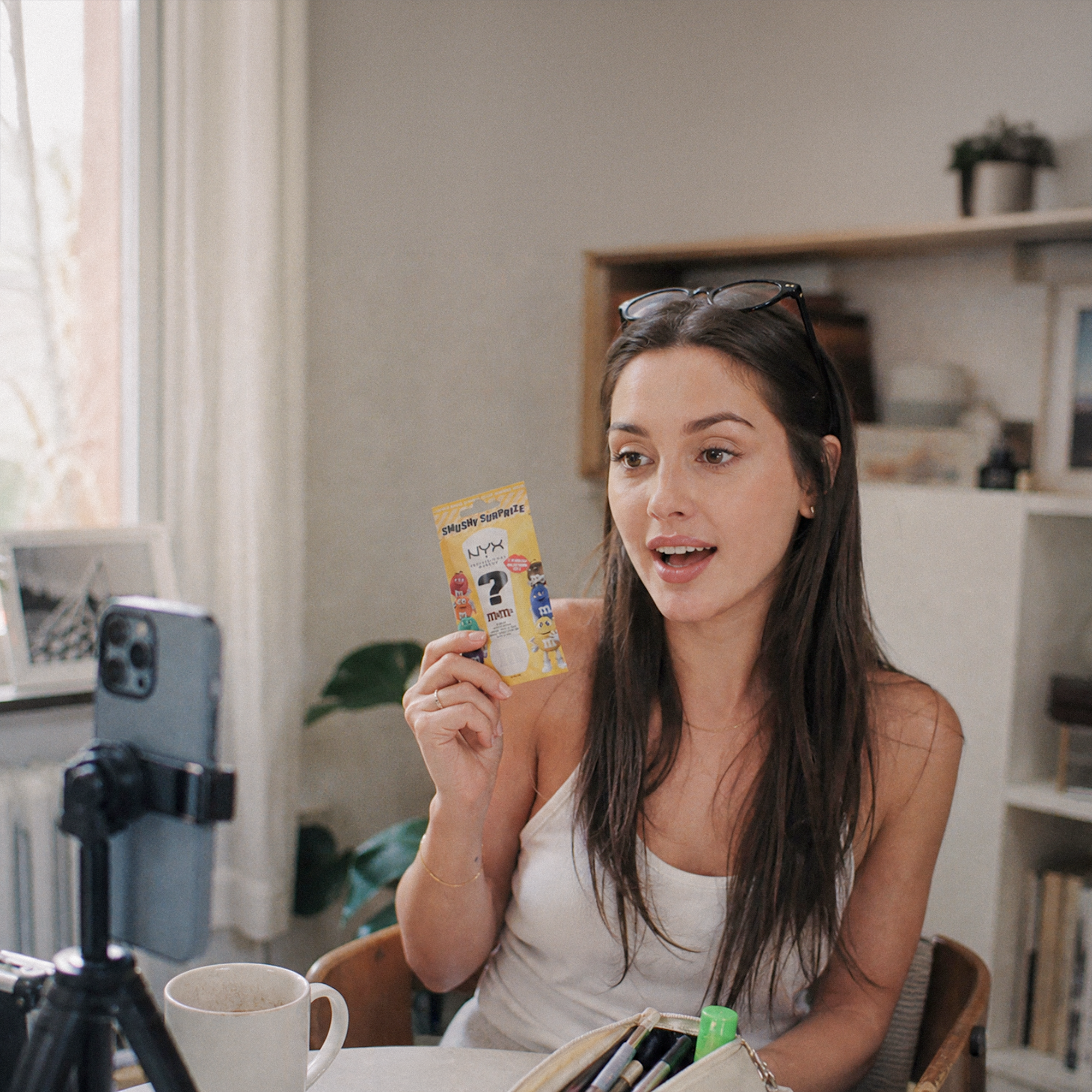
TikTok has turned every product into a performance. Scroll for ten seconds and you'll see it: the slow-motion pull apart of a rainbow cheese toastie, the cloud-like art of a cotton candy sculpture, a pack that clicks shut just so, tapped with ASMR fingernails during a ‘get ready with me’ video.
The posts are rarely about problems solved. They're sharing moments that are designed to feel irresistible. Feeds are built on desire, not need, and the products that win attention are the ones designed to be experienced, felt through a screen, and make you feel the emotional payoff. People don't scroll past a showstopper. They stop, they want it, and then they go looking for it.
Why now?
As Innovators, we need to think differently starting right now. When insight is accessible to everyone, it stops being a source of competitive advantage. AI can surface the same unmet needs for every brand, and fast. But it also means every brand can now reach the same unmet needs at the same speed. If we all start from the same problems, we will keep arriving at the same solutions, just quicker.
The problem-first model was built for a world where knowledge was scarce. In a world where it's abundant, it will increasingly struggle to lead anywhere truly new.
We believe the next wave of innovation will come from a different starting point: understanding how something should feel for someone who is still half asleep on a Tuesday morning commute. That calls for a deep understanding of culture, senses and emotion, and the craft to turn a feeling into a product.
This is where Sensational Advantage lives. Not in finding the problem first, but in designing the experience best.
Curious if a cultural, sensory or semiotic lens could unlock new opportunities for your brand? Book a call with our strategic product experience team. We’d love to hear about your challenges.