What does ‘cultural fluency’ really look like for brands?
July 2026
“Cultural relevance” is quickly becoming one of marketing’s favourite strategic phrases. But genuine cultural fluency is not about chasing trends or borrowing aesthetics from TikTok. It’s about understanding how culture actually works - how communities form, how rituals evolve, and whether a brand has permission to participate in those spaces authentically.
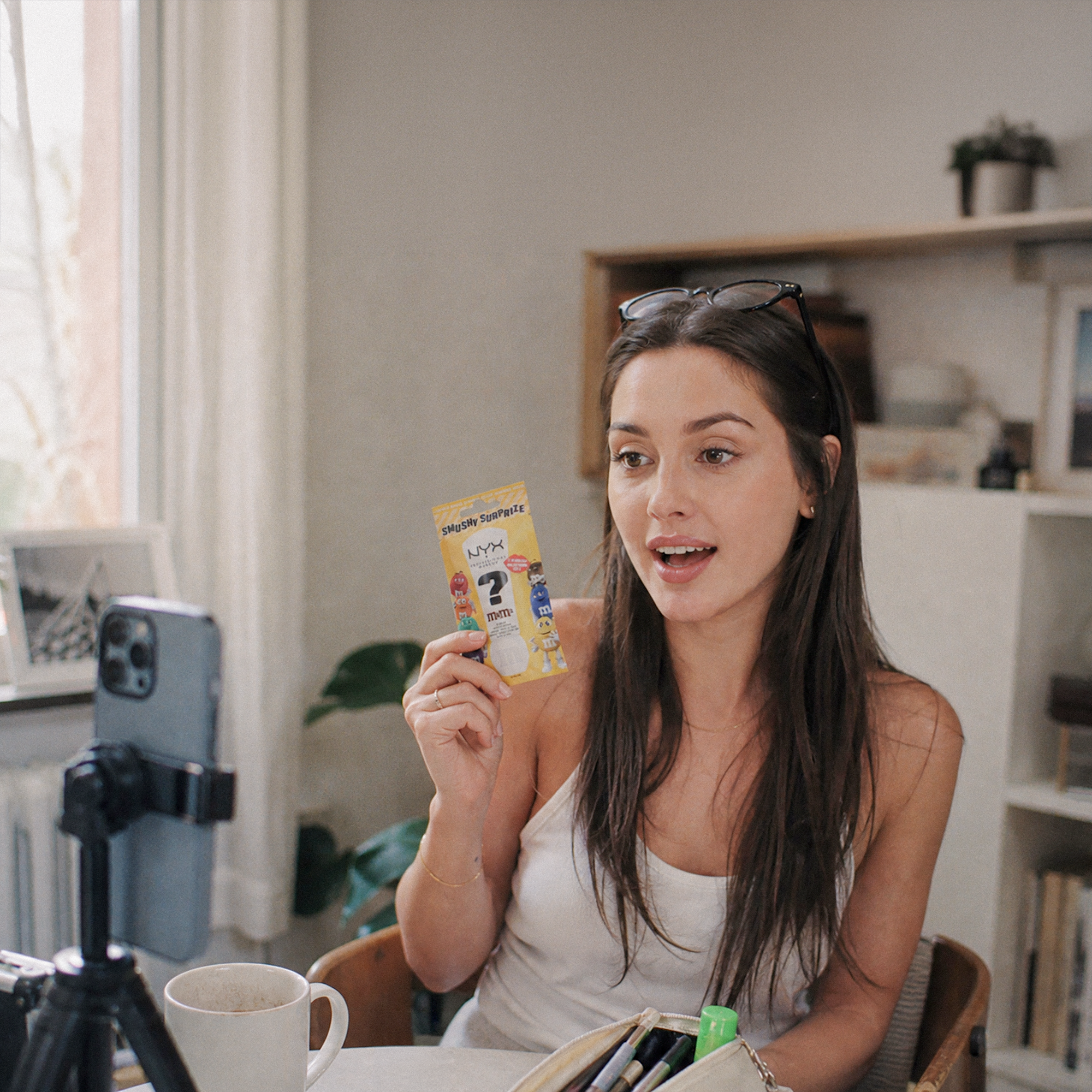
This week, Mars, Incorporated announced a collaboration between M&M’s and NYX Professional Makeup: limited-edition lip balm blind bags inspired by collectible culture, unboxing behaviours and creator-led beauty content.
The launch includes seven M&M’s-inspired shades, milk-chocolate scent cues, and collectible “rare” variants - turning a simple cosmetic product into something designed for social sharing, display and playful discovery.
For Huxly cultural specialist Megan Bourner-Powell, the collaboration offers an interesting case study in what cultural fluency actually looks like in practice.

Fast culture versus slow culture
Most social-first collaborations operate in what we might call “fast culture”: highly visible, highly shareable moments designed for rapid circulation online. Think drops, collectibles, unboxings and limited editions.
This M&M’s x NYX collaboration executes those mechanics well. The blind-bag format, rarity cues and collectible packaging are all engineered for immediate social momentum.
But the more important strategic question is what slower, longer-term meaning sits underneath the activation.
At its best, the collaboration hints at something deeper: the rise of playful indulgence as a small daily ritual: a mood boost consumers can carry, display and share. The challenge now is whether the brands reinforce that meaning beyond the initial launch window.
Participation matters more than visibility
One of the biggest misunderstandings in modern marketing is assuming that cultural relevance simply means entering popular spaces.
In reality, brands increasingly need to participate in culture rather than merely advertise within it.
Beauty culture, particularly online, is not just a media channel. It is a highly engaged community with its own rituals, language and expectations. Creator ecosystems operate as what strategist Eugene Healey describes as “closed networks” - spaces where brands must earn presence through relevance and respect.
The collaboration clearly uses the beauty creator economy as a powerful distribution engine. But its longer-term credibility will depend on whether creators and communities feel genuinely engaged with the product, rather than simply used as amplification tools.
Indulgence is becoming multisensory
One of the most interesting aspects of the collaboration is how it reflects the changing meaning of indulgence itself.
Indulgence is no longer confined to food and drink. Increasingly, consumers seek “small pleasure” experiences through scent, texture, colour, tactility and ritual.
That is why this partnership feels more strategically coherent than it may initially appear.
The chocolate scent, glossy textures, toy-like proportions and nostalgic character design all translate the emotional language of confectionery into beauty culture. Rather than feeling random, the collaboration taps into a broader shift toward multisensory, mood-enhancing product experiences.
In many ways, it reflects how categories themselves are becoming more fluid.
Authenticity is about coherence
Authenticity is often treated as a vague marketing ideal. In practice, it is usually much simpler: do all parts of the collaboration feel coherent?
Does the partnership make sense for both brands?
Does it feel connected to real consumer behaviours?
And do both brands still feel like themselves?
Here, the collaboration largely succeeds. The playful aesthetics, collectible mechanics and sensory cues align naturally with both M&M’s and NYX’s existing brand worlds.
The bigger risk is relying too heavily on the novelty of the drop itself without building a stronger “why now?” narrative around evolving consumer rituals and behaviours.
If the collaboration extends into creator storytelling, retail experiences and repeatable consumer rituals, it has the potential to move beyond a short-term social moment and become something more culturally meaningful.
The bigger takeaway
The most culturally fluent brands today understand that culture is not simply a communications layer added on top of a product.
It is increasingly the environment in which products are discovered, interpreted, shared and emotionally valued.
That means brands can no longer think only about reach. They must think about participation. They must understand the communities they enter, the rituals they borrow from, and the emotional role their products genuinely play in people’s lives.
Viewed through that lens, the M&M’s x NYX collaboration is more than a novelty beauty drop. It is a signal of how modern brands are increasingly trying to operate: less as advertisers interrupting culture, and more as participants attempting to earn a place within it.
Whether this particular collaboration builds lasting cultural equity remains to be seen.
But as a case study in where brand strategy is heading next, it is undeniably revealing.
If you’d like to speak with Megan, fill out the form below and we’ll do the rest.